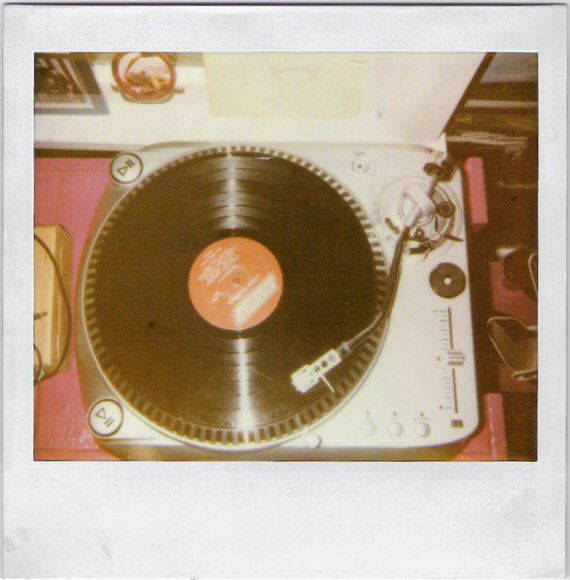
Imagine hearing someone’s voice over a record sent in the mail. Sounds like an over-complicated voicemail, right?
Before even dial phones were popular, many people in the 20th century used these records to send love notes, record messages for their loved ones, or just record audio for someone else to hear. The idea of preserving your voice or another sound on a record was a novel idea.
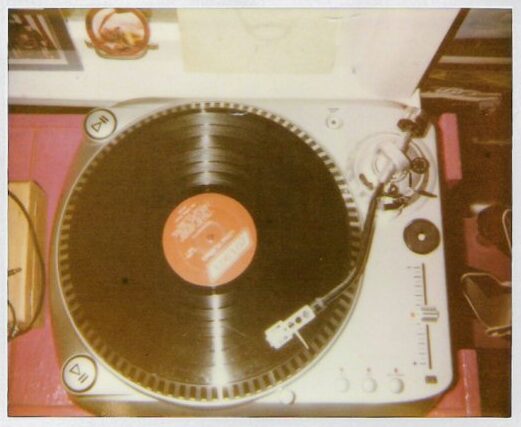
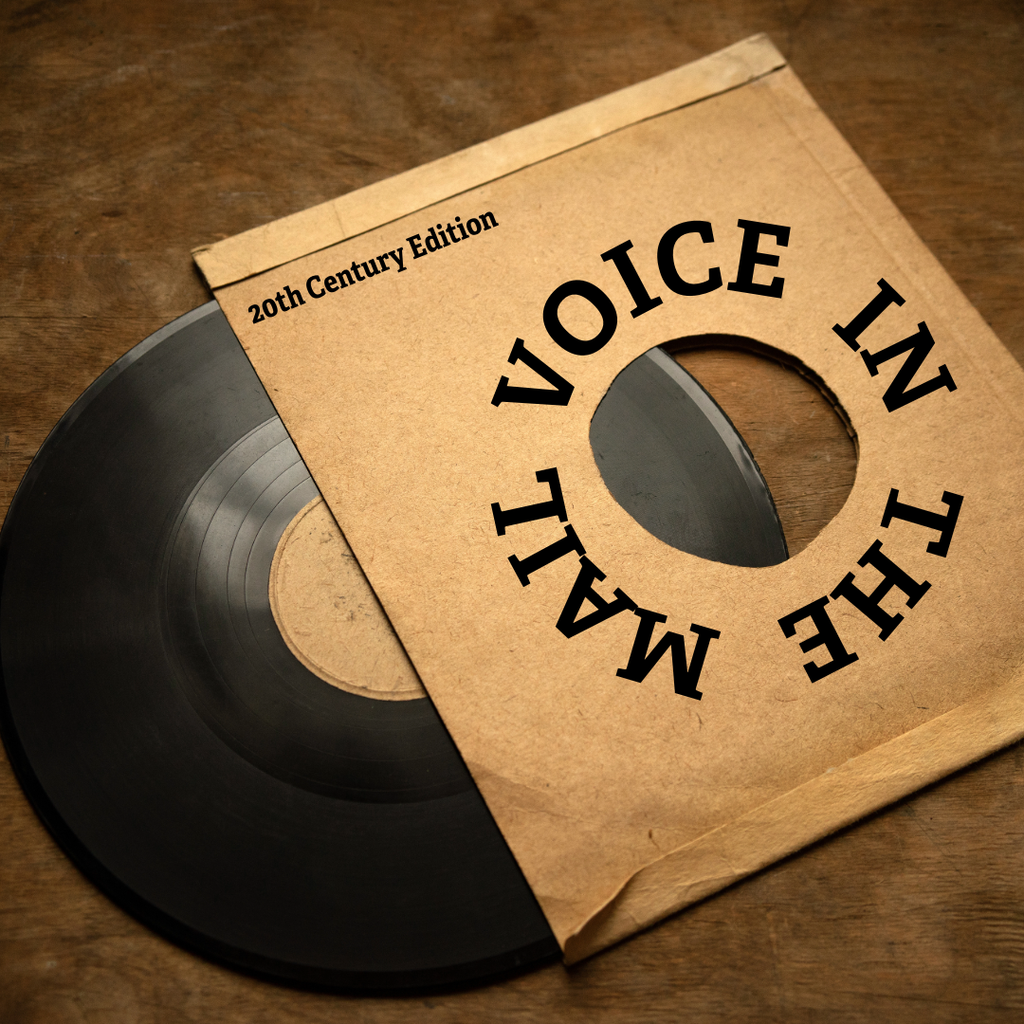
20th century “Voice in the Mail” record (above). “Image” by ici et ailleurs is licensed under CC BY-NC-ND 2.0.
Although this method of sending records in the mail was a popular way to send love notes, it was used for any kind of message, whether it be friendly, political, formal, or any other kind of message.
In the mid to late 20th century, rotary dial phones became the popular method of communication. Audio records were still sent, but simply calling was easier.
Our 21st century version of the “Voice in the Mail” records is voicemail or voice memos. The invention and popularity of smartphones allows us to leave messages after a failed call, or send audio in the form of a text. The popularity of voicemail may be slowly declining, but for the most part, voicemail is still relevant. Voice memos are relatively new and very popular, similar to a text.
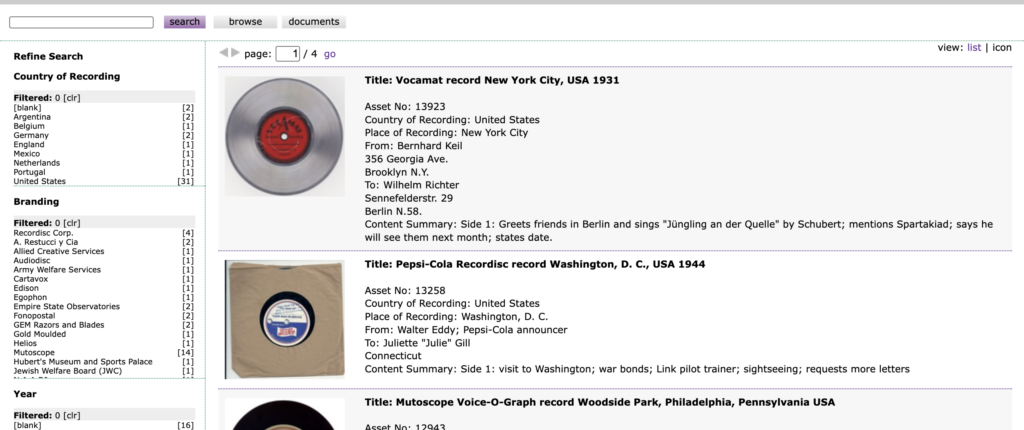
Screenshot of Voice in the Mail Archive (above).
The archive site of Voice in the Mail is very detailed and expansive. There are over 40 recordings with written summaries and details such as who sent the record, where it was sent from, and who it was sent to. Most of the records on the site were recorded in the United States. Most are greetings and updates to friends and family members, but some are other kinds of recordings, like one titled “Allied Creative Services” that includes a Congressman speaking on Vietnam, a reminder about a June 3rd election, a woman singing an election song about making your voice heard by voting, and election history.
This site is accessible in the way that it provides both audio and visual information: there are descriptions and transcriptions of every single audio recording (record). This is helpful for deaf users. The audio is adjustable, which, along with the transcript of the audio that allows users to follow along with the audio or read without the audio, is helpful for users who are deaf, hard of hearing, and/or have sensitive hearing and prefer more specific controls. The font color is also black on a white background, which makes it as clear as possible for visually impaired users. The font is a bit small, but the size can be adjusted by zooming in on the user’s device.
Overall, this site seems rather easy to navigate, and shows the history of audio recordings in the 20th century. Voice in the Mail was a very important part of many people’s lives and relationships, and I think the archive shows that.
Further reading: Phonopost (archive) site – https://www.phono-post.org/browse.cgi
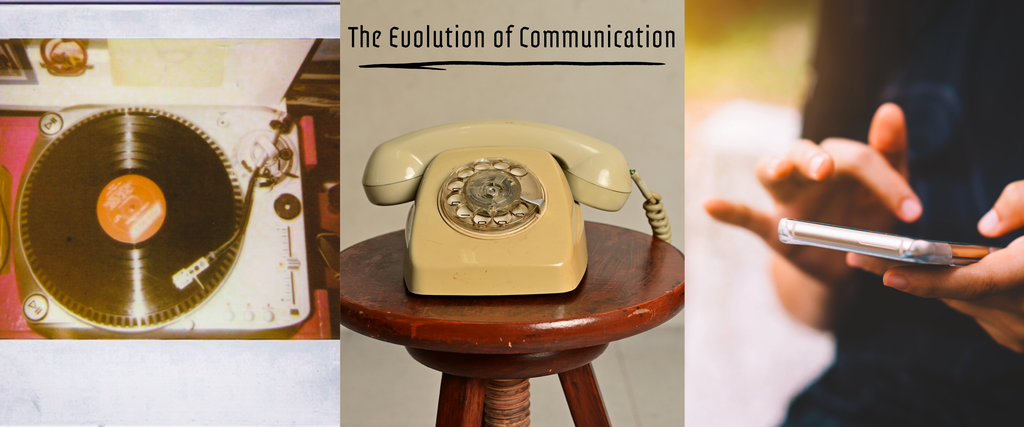
(Instagram Carousel Post, above)
(LinkedIn post, above)

(Meme, above)
Leave a Reply